• Rose Pedals, 3330 Westerly Lane, Sarasota FL 34239

Reframing Value: What Salon Chair Footrest Wholesale Rates Really Signal

Price is often discussed first in procurement, but it should never be discussed alone. In salon environments, wholesale decisions quietly shape client experience, staff longevity, and long-term operational stability.

Why Wholesale Decisions Carry Invisible Consequences

When I speak with salon owners, distributors, or facility planners, the conversation often begins with numbers. How many units. How quickly they can ship. What the discount looks like at scale. These questions make sense. But they are incomplete.

Wholesale purchases are not just transactions, they are commitments. Each component installed across multiple chairs quietly influences thousands of client interactions. Over time, those interactions shape reputation, staff confidence, and operational flow.

I learned early on that furniture failures rarely announce themselves dramatically. They appear as small interruptions. A chair that is harder to enter. A footrest that flexes under load. A client who shifts too often. Multiply those moments across locations or years, and cost takes on a very different meaning.

This is why salon chair footrest wholesale rates should always be evaluated as indicators of long-term value, not simply short-term savings.

Moving Beyond Unit Cost to System Value

In wholesale environments, there is a natural temptation to standardise around the lowest acceptable price. Uniformity feels efficient. But efficiency without performance quickly erodes.

A footrest is a system component. It bears weight, guides movement, and stabilises posture. When sourced in volume, its performance consistency becomes just as important as its per-unit cost. Variability leads to uneven client experiences, which are difficult to correct once chairs are installed and in use.

From my perspective, true value emerges when wholesale pricing aligns with engineering integrity. Materials that hold their shape. Mechanisms that adjust smoothly over time. Designs that anticipate real-world use rather than idealised conditions.

When salons evaluate wholesale footrest for salon chairs, the question should not be how inexpensive the unit is today, but how predictably it will perform across every chair, every client, every year.

What Wholesale Footrests Reveal About Salon Maturity

Salons evolve in phases. Early stages focus on aesthetics and brand image. Growth stages prioritise throughput and staffing. Mature operations begin optimising systems.

Wholesale furniture decisions usually appear at that third stage. They signal a shift from styling spaces to managing environments. Leaders begin asking different questions. How does this scale. How does it age. How does it affect staff ergonomics and client perception over time.

Consistent footrest performance across all chairs creates a level baseline. Staff adapt faster. Clients feel the same sense of stability regardless of seat location. This consistency reduces cognitive load for everyone involved.

In that sense, wholesale footrest selection becomes a proxy for operational thinking. It reflects whether a salon is reacting to immediate pressures or designing deliberately for sustained performance.

Durability, Scale, and the Economics of Repetition

What makes wholesale economics unique is repetition. A small design weakness becomes costly when repeated hundreds of times. A minor improvement becomes powerful when multiplied across locations.

This is where durability takes on strategic weight. Reinforced structures, reliable attachment points, and thoughtful adjustability reduce maintenance cycles. Fewer repairs mean fewer service interruptions. Fewer interruptions mean smoother days.

Over years, these effects compound. Replacement schedules stretch. Staff complaints diminish. Client comfort stabilises. The initial delta between low-cost options and thoughtfully engineered solutions narrows, then reverses.

Viewed through this lens, salon chair footrest wholesale rates are less about discounts and more about predictability. Predictable performance is one of the most underappreciated assets in service environments.

Designing for Many Chairs, and Many Years

Wholesale design demands a different mindset than single-unit design. A product that performs beautifully in isolation may falter under constant use across dozens of chairs.

In my work, I have always prioritised scalability. Components must install cleanly. They must function uniformly. They must tolerate variation in clients without degradation.

A well-designed wholesale footrest for salon chairs should feel invisible in daily operations. It should not require special instruction or constant adjustment. It should simply support the human body and then get out of the way.

This is where subtle innovation matters. Not showy features, but quiet refinements that reduce friction at scale. These are the kinds of decisions that future-proof environments without drawing attention to themselves.

The Future Logic Behind Smarter Wholesale Choices

Looking forward, salons will face increasing pressure to balance cost control with accessibility, safety, and comfort expectations. Clients are becoming more aware of how environments make them feel. Staff are less willing to compensate for poor design.

In this future, wholesale sourcing will no longer be a back-office decision. It will be a strategic lever. The salons that thrive will be those that recognise furniture not as static equipment, but as part of a living system.

Investing thoughtfully in wholesale footrest for salon chairs today prepares spaces for demographic shifts tomorrow. Aging populations, heightened accessibility awareness, and demand for consistency across multi-location brands will only intensify.

The future does not belong to the cheapest solution. It belongs to the most resilient one.

Takeaway

Wholesale pricing tells a story, but only if we know how to read it. Behind every rate is an assumption about use, lifespan, and human interaction. The challenge is choosing assumptions that align with reality.

When salons treat footrests as systems rather than accessories, wholesale decisions become strategic rather than transactional. The result is quieter days, steadier clients, and environments that age gracefully.

True value is rarely dramatic. It is built through choices that hold up, chair after chair, year after year.

FAQs

What do salon chair footrest wholesale rates typically include?
They usually reflect unit pricing at scale, but the true cost should also account for durability, installation efficiency, and long-term maintenance.

How does a wholesale footrest for salon chairs differ from retail options?
Wholesale designs prioritise consistency and longevity across multiple installations, whereas retail options often focus on individual appearance.

Why is durability more critical in wholesale purchases?
Because small failures multiply quickly when units are installed across many chairs, increasing maintenance and replacement costs.

Can wholesale footrests be retrofitted to existing salon chairs?
Many are designed specifically to replace standard configurations, allowing salons to upgrade performance without full chair replacement.

How do wholesale choices impact staff experience?
Consistent, stable footrests reduce physical strain and adjustment time, improving daily workflow and long-term comfort for stylists.

Are higher wholesale rates always better?
Not necessarily. The goal is alignment between price, engineering quality, and expected lifespan, rather than cost alone.
Designing Stability Forward: Why an Adjustable Footrest for Salon Chair Is No Longer Optional

Two decades ago, salon furniture was built to look professional. Today, it must perform intelligently. What sits beneath a client’s feet now determines far more than comfort, it determines control, safety, and dignity.

Where Salon Design Quietly Fails

I did not come to salon innovation from a showroom or a design lab. I came to it by watching people struggle. Long before I invented anything, I observed something that stayed with me, clients who wanted to participate in everyday life but were blocked by poorly designed furniture. A salon chair looks neutral until you watch someone try to climb into it without proper support.

In healthcare settings, these moments are obvious. In salons, they are quieter, often brushed aside. A stylist offers an arm. An assistant lifts. The client apologises. Everyone moves on. But the friction remains. When repeated across thousands of appointments, that friction becomes a systemic failure.

Salons are not medical spaces, but they are human spaces. That distinction matters. Design that ignores the body is not neutral, it is exclusionary by default.

The Footrest as a System, Not an Accessory

For years, the industry treated the footrest as an afterthought. Most chairs ship with a standard U-shaped bar because it has always been there. Tradition, not performance, defined the choice. But the footrest is not decorative hardware. It is a load-bearing interface between body, gravity, and balance.

When that interface fails, the entire experience destabilises. Clients shift. Stylists compensate. Precision suffers. Over time, fatigue sets in, physically and cognitively. What looks like a small design oversight becomes an operational cost.

That realisation reframed my work. Instead of asking how a footrest should look, I asked what it should do. Support different bodies. Enable safer entry and exit. Reduce micro-movements during detailed work. Adapt without drawing attention to itself.

This is where the adjustable footrest for salon chair stopped being an idea and became a responsibility.

Why Adjustability Has Become a Baseline Expectation

We live in a world where products increasingly respond to users rather than forcing users to adapt. Phones adjust brightness. Cars adjust seating dynamically. Even homes are learning how we move through them. Against that backdrop, a fixed footrest feels outdated.

Adjustability is not a luxury feature. It is a recognition that bodies vary. Height, mobility, balance, age, and confidence all influence how someone occupies a chair. A single static position cannot serve that diversity.

An adjustable system allows feet to find their natural resting place. It shortens the distance between standing and seated positions. It restores a sense of agency to clients who may already feel vulnerable. These benefits compound quietly, appointment after appointment.

From the stylist’s perspective, adjustability reduces compensatory strain. When the client is stable, hands can focus on craft rather than correction. Over time, this improves consistency and reduces fatigue. In a competitive industry, that consistency matters.

Human-Centered Engineering in Everyday Environments

Good design disappears when it works. That is not an accident. Human-centered engineering focuses on reducing friction rather than adding spectacle. The most successful solutions feel inevitable once they exist.

With new design salon chair footrests, the goal has never been to reinvent the salon aesthetic. It has been to reengineer its foundation. That means durability without bulk. Movement without noise. Adjustability without complexity.

There is a subtle futurism in this approach. Not the kind associated with chrome or glowing interfaces, but the kind rooted in intelligence. Systems that anticipate human needs instead of reacting to problems. Furniture that evolves alongside demographic realities.

As populations age and expectations of accessibility rise, salons that ignore these signals will feel increasingly out of step. Design always communicates values, whether intentional or not.

What New Design Signals About the Future of Salons

Salons have always been cultural mirrors. They reflect how society understands beauty, care, and inclusion. Today, those definitions are expanding. Clients expect environments that respect their bodies without requiring explanation.

This shift is not driven by regulation alone. It is driven by awareness. People notice when a space makes them feel capable rather than accommodated. That distinction builds loyalty far more effectively than marketing language ever could.

The new design salon chair footrests emerging today signal a broader transition. From static furniture to responsive systems. From one-size-fits-all assumptions to adaptable environments. From silent discomfort to quiet confidence.

In many ways, this mirrors larger design movements across industries. The future belongs to products that integrate seamlessly into human routines while improving them at the margins.

When Accessibility Becomes an Operating Standard

Accessibility is often framed as a special consideration. In reality, it is a measure of design maturity. When environments work for those with limited mobility, they tend to work better for everyone.

An adjustable footrest for salon chair supports elderly clients, yes. It also supports children, shorter adults, clients recovering from injury, and stylists who value efficiency. Inclusive design rarely serves a single group. Its value multiplies.

From an operational standpoint, this translates into smoother appointments, fewer interruptions, and a calmer floor. Over time, those gains accumulate. They show up in retention, reputation, and resilience.

The salons that thrive in the coming decade will not be the ones chasing trends. They will be the ones investing in fundamentals that quietly elevate every interaction.

Takeaway

Salons are places of transformation, but that transformation should begin with stability. When the body feels supported, everything else flows more naturally. Confidence rises. Craft sharpens. Trust deepens.

Looking ahead, the most enduring innovations will not announce themselves loudly. They will simply work, appointment after appointment, body after body. Designing for that future starts beneath the feet.

FAQs

What makes an adjustable footrest for salon chair different from standard footrests?
An adjustable system responds to different body types and mobility needs, whereas standard footrests assume a single ideal position that rarely fits everyone.

Are new design salon chair footrests compatible with existing chairs?
Most are engineered to replace traditional U-shaped footrests, allowing salons to upgrade function without replacing entire chairs.

How do adjustable footrests improve stylist performance?
They reduce client movement and stabilise posture, allowing stylists to work with greater precision and less physical strain over long shifts.

Do new design salon chair footrests support elderly or mobility-limited clients?
Yes. Adjustability shortens entry and exit distances and provides reliable support, improving safety and confidence for these clients.

Is adjustability a trend or a long-term shift?
It reflects a broader move toward human-centered design. As expectations around accessibility and comfort rise, adjustability will remain a baseline requirement.

Can upgrading footrests impact overall salon perception?
Absolutely. Clients may not name the feature, but they feel the difference. Comfort and stability subtly reinforce professionalism and care.


What Salon Footrests Wholesale Deals Mean for Client Comfort and Long-Term ROI

Two truths define the modern salon. Comfort shapes the customer experience, and confidence shapes the stylist’s ability to deliver their best work. Over the years, we have learned that both depend on something deceptively simple. A well-designed footrest supports every transition, every appointment, and every client who steps into the chair. This onsite blog explores why salon footrests wholesale deals are reshaping accessibility, stability, and long-term value for salons that want to elevate their standards.

  1. The Real Problem That Inspired Accessible Footrest Design

The need for an improved system became clear in 1995. While working in Nursing Homes and Assisted Living Facilities, I watched many customers with disabilities struggle to enter a salon styling chair. Aides would attempt to lift them, often risking injury and creating moments of fear or embarrassment. Those scenes stayed with me and revealed a larger industry gap. Salons needed a safer, more dignified way for clients to access the chair.

The idea that would eventually evolve into our present-day footrest began there. Once I saw the problem clearly, the search for a manufacturer began. A company in Maryland created our first units, and later a Minnesota supplier approached us with an improved manufacturing process. That partnership allowed the design to scale and reach the salons that needed it most.

  1. Why Wholesale Solutions Matter for Salon Leaders

Salon owners consistently face a balancing act. They want upgraded equipment that enhances client experience, yet they also need solutions that fit within realistic budgets. This is where affordable salon chair footrests wholesale options create real value. Instead of piecemeal upgrades, salons can replace outdated, rigid designs with a consistent modern system across all chairs.

Wholesale ordering also ensures uniformity. Each station follows the same standard of safety, comfort, and accessibility. For clients, this creates predictability. For stylists, it creates confidence. For owners, it prevents years of mismatched equipment that ages the environment.

  1. How a Modern Footrest Improves Client Safety and Efficiency

Traditional footrests rarely account for the challenges faced by many patrons. Clients with mobility limitations often hesitate when stepping toward the chair. Shorter clients need added leverage to push back toward the shampoo bowl. Children require a stepping surface they can trust.

A modern replacement footrest solves all three issues simultaneously. Features such as a smoothly upward-moving footplate, a stable adjustable bar, and a ladder-like entry support easy access for customers of all ages and physical abilities. When salons combine these features through wholesale purchasing, they remove friction and reduce risk across the entire client journey.

  1. Scaling Comfort Across Every Styling Station

One of the strongest advantages of salon footrests wholesale deals is scalability. Instead of improving a single station, salons can upgrade the entire floor without inflating costs. This consistency is important for salons that serve seniors, children, wheelchair users, and clients with limited mobility. When every chair offers the same stability and entry support, clients feel safer and stylists work more efficiently.

Upgraded footrests also reduce the learning curve for staff. They do not need to adjust to a different mechanism at each station. They know exactly how to guide clients in and out of the chair, which speeds transitions and improves appointment flow.

  1. ROI and Long-Term Advantages of Wholesale Upgrades

The long-term return on investment becomes clear once salons shift from individual upgrades to wholesale replacement. The gains include:

• Faster client transitions
• Reduced risk of falls or imbalance
• Lower liability concerns
• More ergonomic working positions for stylists
• Improved accessibility for elderly or physically challenged clients
• Enhanced consistency across all service stations

A single wholesale upgrade influences every appointment. This is why forward-thinking salons now view accessibility improvements as a business strategy, not just equipment replacement.

Final Reflection

We started this journey with a simple belief. Every client should be able to enter and exit a salon chair safely and with dignity. When salons adopt upgraded systems through affordable salon chair footrest wholesale programs, they commit to that belief at scale. They are choosing long-term comfort, stronger client loyalty, and a future-ready approach to inclusive design.

FAQs

  1. What makes salon footrests wholesale deals more valuable than single purchases?

Wholesale deals allow salons to upgrade every chair with the same high level of comfort and accessibility. Uniformity across stations improves safety, reduces client hesitation, and creates a more professional environment.

  1. How does a modern footrest support clients with mobility challenges?

Modern designs include an upward-moving footplate, secure grip points, and stable support bars. These features make entering and exiting the chair easier for elderly patrons, wheelchair users, and clients with limited balance.

  1. Why are affordable salon chair footrests wholesale options important for growing salons?

They provide cost efficiency and scalability. Salons can maintain a consistent standard without the budget strain that comes with buying one unit at a time.

  1. Do upgraded footrests impact stylist performance?

Yes. When clients are stable and positioned correctly, stylists can work more efficiently and ergonomically. This reduces appointment delays and minimizes repetitive strain.

  1. How do wholesale upgrades influence long-term ROI?

They reduce liability risk, increase appointment speed, enhance customer satisfaction, and future-proof the environment for inclusive service. Over time, these benefits outperform the initial investment.


How a Bottom Mount Footrest for Salon Chairs Is the True Upgrade Beyond the U-Shaped Standard

A salon chair should welcome every client with ease. Yet for decades, the standard U shaped footrest has created more barriers than comfort, especially for clients with mobility challenges. The shift toward a bottom mount footrest for salon chair design is more than an upgrade, it is a necessary realignment with accessibility, dignity, and the real movement patterns of those who need just a bit more support to feel safe.

As someone who spent years watching clients struggle to access a styling chair, I learned that comfort begins long before the appointment does. It begins with safe entry, effortless positioning, and a footrest designed around the person, not the chair.

  1. Rethinking Client Entry as the First Point of Care

When I worked in nursing homes and assisted living communities in the mid 1990s, I saw a pattern that stayed with me. Clients with limited mobility were often unable to step over the fixed bar of a U shaped footrest. Aides would attempt to lift them into the chair, which was unsafe for everyone involved. It was in those moments that the earliest idea for today’s bottom mounted design took shape.

That experience taught me that accessibility begins with entry. If a client cannot safely get into the chair, nothing else about the service can function well. A bottom mount footrest for salon chair models addresses that barrier directly and intentionally.

  1. The Problem with the Old U-Shaped Footrest

The standard U-shaped configuration forces clients to raise their legs, step over a bar, or twist awkwardly to find balance. Children struggle to climb into the chair. Shorter adults cannot brace themselves easily, especially when being positioned toward the shampoo bowl. Clients with wheelchairs or walkers face a solid structural obstacle that simply does not move.

It became clear over time that these limitations were not small inconveniences. They were built-in design flaws.

  1. Why a Bottom Mount Footrest Creates True Accessibility

A bottom mounted footrest replaces the rigid U-shaped frame with a design that moves with the client’s natural motion. The key difference is the attached footplate that lifts upward during entry and exit. Instead of stepping over something, clients step into the chair space without obstruction. When lowered, the plates provide a stable and comfortable resting position.

For shorter clients, the adjustable bar allows them to gently push themselves back toward the bowl with better alignment and less strain. Children benefit from the ladder-style structure, which lets them climb in independently rather than being lifted.

  1. Designed for Stability, Reach, and Everyday Use

Precision matters. The footrest holds a standard width of 11¼ inches and extends to 18 inches when needed, giving salons flexibility without compromising structure. The front bar measures 13⅞ inches and supports a 6×6 inch footplate for solid footing. These details were developed through decades of observation, testing, and refinement with real clients and stylists.

The bottom mount design provides better load distribution than the U shaped model, reducing wobbling, bending, or pressure points that wear down over time.

  1. The Real Impact on Clients with Disabilities

For clients with mobility challenges, this design is more than a convenience. It is the difference between needing to be lifted and being able to enter the chair independently. That independence is everything. It changes the dynamic between client and stylist. It changes how the appointment begins. It changes how a person feels about their own body and capabilities.

To help someone access and exit a chair safely was once a dream of mine. Today, it is a daily reality in salons that have embraced modern accessibility.

  1. What This Upgrade Means for Modern Salons

Replacing the U-shaped footrest with a bottom mounted model is a small change with a large ripple effect. Salons gain a safer, more inclusive environment without altering their chair inventory. Clients receive a more respectful, stable, and comfortable service experience. And stylists benefit from better ergonomics and less physical strain during long appointments.

This is what evolution in salon seating should look like, practical, human centered, and forward thinking.

FAQs

  1. What makes a bottom mount footrest more accessible than a traditional U-shaped footrest?
    It removes the obstructive crossbar, allowing clients to enter without lifting their legs or stepping over any structure. The lifting footplates create a clear, safe entry path.
  2. Does this footrest help clients with disabilities?
    Yes. It allows safer access and exit, reduces lifting, and offers stable support for clients using mobility aids.
  3. Can children use the chair independently with this design?
    Many children can climb in easily using the ladder-like placement of the lowered footplates.
  4. What makes the footrest a reliable replacement for U-shaped models?
    Its bottom mounted design stabilizes weight, reduces wobble, and offers expanded width for better foot placement.
  5. Does the adjustable bar help during shampooing?
    The adjustable bar allows shorter clients to gently push themselves back toward the bowl for better alignment and comfort.
  6. Is the installation complicated?
    Most salons find the replacement process straightforward, since the design is engineered to attach from the bottom of the seat in place of the original U-shaped model.

Redefining Comfort: The Rise of the Rose Pedal Salon Footrest

There’s a quiet revolution happening beneath every salon chair. It’s not in the lighting or décor but in the subtle mechanics of accessibility and comfort. Where once the industry focused solely on aesthetics, a new generation of salon owners is asking a deeper question: how do we design experiences that serve everyone equally—and gracefully?

The Hidden Barrier in Everyday Design

Most salon interiors are masterpieces of form, texture, and light. But hidden within that elegance lies a long-ignored obstacle: the chair itself.
For clients with mobility challenges, the act of getting into or out of a salon chair can be exhausting, even risky. It’s not just a matter of comfort—it’s about dignity. Stylists often find themselves balancing empathy with practicality, trying to help without making the client feel dependent.

This everyday tension became the seed of innovation for what would become one of the most quietly transformative tools in modern salon design.

The Turning Point for Salon Accessibility

In 1995, while working in a nursing home, I saw the same scene repeat itself—again and again. Aides struggled to lift residents into styling chairs, and the residents, eager to feel beautiful, often ended up embarrassed or uncomfortable. That moment defined everything that followed.

The question wasn’t how to modify the chair—it was how to reimagine interaction. Accessibility wasn’t supposed to feel clinical or awkward. It should feel invisible, built into the experience from the ground up.

This is where the philosophy behind every Rose Pedal Salon Footrest began: to merge engineering precision with human-centered care.

What Sets the Rose Pedal Salon Footrest Apart

Every salon tool claims to improve comfort, but few are built with empathy at the center of their design. The Rose Pedal Salon Footrest isn’t just a product upgrade—it’s a rethinking of what “comfort” means for both stylist and client.

Crafted from reinforced steel and precision-balanced components, the footrest maintains its form even under high-volume use. Yet its real innovation lies in accessibility. By providing stable, adjustable support, it eliminates the barrier between mobility and participation. Clients who once required assistance can now enter and exit the chair independently.

Stylists notice the difference immediately. Sessions flow more smoothly, posture improves, and both sides of the chair share the same ease of movement.

Engineering Access into Beauty Spaces

Inclusivity doesn’t start with compliance. It starts with imagination.
When designing adaptive salon equipment, every detail—from the pedal angle to the tactile surface texture—has to anticipate the real-world motions of diverse clients. The Rose Pedal Salon Footrest was engineered to meet that complexity.

It adapts naturally to a range of body types and mobility conditions without mechanical fuss or aesthetic compromise. That balance between utility and beauty has become its signature.

As salons modernize their layouts and experiences, products like these are no longer optional—they are essential infrastructure for the next chapter of client care.

How the Salon Footrest Attachment in Florida Is Shaping Industry Standards

Florida has quietly become a proving ground for salon innovation. With its high senior population and growing inclusivity mandates, salon owners are rethinking everything from lighting to floor spacing. And at the center of that transformation sits a deceptively simple upgrade—the salon footrest attachment in Florida that has been redefining what “accessibility” looks like in style-driven spaces.

Early adopters report striking results: fewer lifting incidents, faster client turnover, and higher satisfaction ratings across all age groups. The data aligns with a larger cultural shift—consumers now value comfort and care as much as aesthetics.

In other words, Florida’s salons aren’t just following a trend. They’re setting a precedent.

Closing the Comfort Gap for Good

Accessibility in salons isn’t charity—it’s strategy. It builds loyalty, widens clientele, and elevates brand perception in ways no marketing campaign can replicate.

The Rose Pedal Salon Footrest represents more than a product line. It’s a quiet promise that no client will feel left out of the experience of beauty again. For salon owners, it’s a reminder that innovation isn’t always loud. Sometimes, it’s the subtle click of a footrest that says, “You belong here.”

And that sound might just be the future of inclusive design.

FAQs

  1. What makes the Rose Pedal Salon Footrest different from standard footrests?
    It’s designed specifically for accessibility and balance, offering secure footing and independent access for clients of all mobility levels.
  2. How does the salon footrest attachment in Florida benefit salon owners?
    It reduces the need for staff assistance, improves safety, and creates a more inclusive environment for both regular and new clients.
  3. Can the footrest be installed on existing salon chairs?
    Yes. It’s designed to integrate seamlessly with most standard salon chair bases, allowing easy installation without professional modification.
  4. Is the Rose Pedal footrest only for clients with disabilities?
    Not at all. While it’s engineered with accessibility in mind, clients of all ages and abilities benefit from its ergonomic stability.
  5. Why are Florida salons leading in adopting this innovation?
    Florida’s diverse clientele and proactive inclusivity standards make it the ideal testing ground for adaptive salon equipment.
  6. What is the long-term value of installing this footrest?
    It enhances client satisfaction, strengthens brand reputation, and future-proofs salons for emerging accessibility requirements across the U.S.

Reinventing Accessibility: How a Simple Footrest Changed the Salon Experience Forever

In every salon, there’s a quiet moment before a service begins—the chair turns, the client settles, and trust is built in that small exchange. But for millions with limited mobility, this moment has long been a struggle. What began as a daily challenge inside nursing homes has become the blueprint for rethinking inclusivity in the beauty industry.

The Moment That Sparked a Movement

It started in the most unexpected setting: a nursing home.
In the mid-1990s, I watched as aides struggled to lift residents into standard salon chairs. It wasn’t carelessness—it was simply the reality that the design had never considered people with disabilities. I saw residents who wanted to look and feel their best, but their experience began with discomfort and dependence.

That memory stayed with me. The image of someone unable to enjoy a simple haircut without assistance became the turning point. I knew the solution had to be practical, inclusive, and effortless.

From Observation to Innovation

The idea for what would become today’s adaptive salon chair replacement footrest started not as a product but as a question: How could a single piece of hardware restore dignity?

I began searching for manufacturers who understood the importance of engineering precision with empathy. Our first partner, a small company in Maryland, helped prototype the concept. Later, a Minnesota-based manufacturer refined it—offering stronger materials, smoother motion, and consistent quality.

This journey wasn’t just about producing a component. It was about reshaping how salons think about accessibility—from something optional to something foundational.

Designing for Dignity and Daily Function

Every stylist knows that efficiency matters as much as aesthetics. The salon chair footrest replacement we developed needed to do more than assist with entry; it had to enhance every service interaction.

The result is a functional, universal design that lets clients position themselves comfortably and independently. The structure supports natural movement and provides stability without altering the appearance of the salon’s existing furniture.

Stylists appreciate how it improves workflow. Clients, especially seniors or those using mobility aids, appreciate how it removes anxiety from the most basic act of self-care: sitting down safely.

Engineering a Better Salon Chair Footrest Replacement

What makes this footrest different isn’t just its physical design but its human-centered engineering. It redefines what “replacement” means in the salon context.

Instead of replicating the outdated forms of traditional chair accessories, it upgrades them. Powder-coated materials resist wear from high-volume use. Reinforced brackets ensure no wobble or slippage. Each salon chair replacement footrest integrates seamlessly without requiring expensive modifications.

This simplicity in installation hides the sophistication of the idea. In the same way good architecture disappears into experience, great accessibility design simply works—quietly and consistently.

Beyond Accessibility: The Human Return on Design

The success of this innovation can’t be measured in sales alone. The real return lies in what it gives back: independence, dignity, and inclusivity.

For elderly clients, it means not having to ask for help. For wheelchair users, it means being treated as equals in environments that once felt exclusionary. For salon owners, it translates into customer loyalty, stronger reputation, and an expanded client base.

Accessibility isn’t a trend. It’s the future of service design—and every upgrade that respects human experience becomes part of a much larger transformation.

The Future of Universal Salon Comfort

As more salons adopt adaptive solutions, the industry edges closer to a universal model of care—where comfort and inclusivity are designed in, not added on.

The evolution of the salon chair footrest replacement is proof that small innovations can spark systemic change. From nursing homes to modern beauty studios, what began as a personal observation has become a collective step forward in how we define beauty: not by limitation, but by access.

Reflect

When we talk about design that matters, we often think of technology or architecture. But sometimes, it’s a single hinge or pedal that carries the greatest impact.

Creating this salon chair replacement footrest wasn’t about reinventing the chair. It was about reimagining the experience—making sure that everyone, regardless of mobility, has the chance to participate in the rituals that make us feel human.

And that’s not just innovation. That’s empathy engineered.

FAQs

  1. What makes this salon chair footrest replacement unique?
    It’s designed for universal accessibility, offering stability and ease of use without altering the look or structure of your existing salon chairs.
  2. How does the salon chair replacement footrest help clients with mobility challenges?
    It allows clients to enter and exit salon chairs safely and independently, eliminating the need for physical assistance and improving their comfort throughout the service.
  3. Is the footrest compatible with all salon chair models?
    While designed for broad adaptability, it’s best suited for chairs that allow bolt-on or adjustable mounting systems, making it a practical upgrade for most modern salons.
  4. Does replacing a salon chair footrest require professional installation?
    No. Most salon owners can install the unit easily using basic tools. Each product includes simple instructions to ensure seamless setup.
  5. How does the new design benefit stylists?
    Stylists experience smoother workflow and reduced strain, as clients can adjust their position comfortably without assistance—saving time and improving ergonomics.
  6. Why should salons consider investing in this replacement footrest?
    It’s not just an accessory—it’s an investment in client dignity, staff efficiency, and brand reputation. Accessibility is becoming a defining feature of forward-thinking salons.

The Future of Hairdressing Chair Footrests

The Problem with Standard Footrests

If you’ve ever worked in a salon with a worn-out footrest, you know the frustration. They wobble, they break, and they often fail to support clients properly. A standard hairdressing chair footrest may do the bare minimum, but it rarely provides true stability or ergonomic benefit.

This often leads to awkward moments — clients fidgeting to find balance, stylists pausing to reposition, and sometimes even unsafe transfers for older adults or those with mobility challenges.

A New Design for Modern Salons

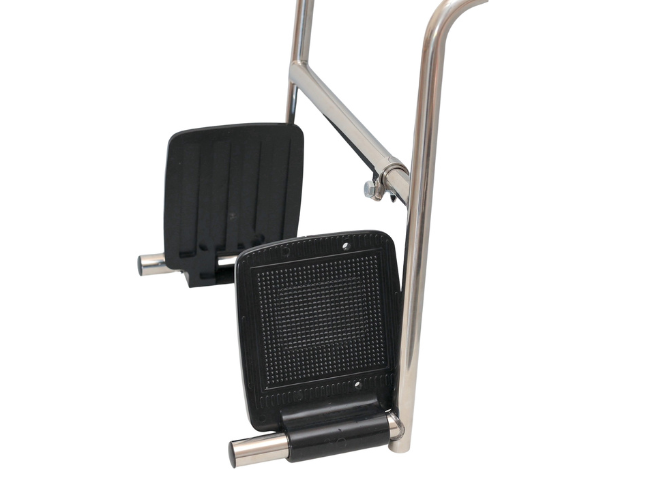
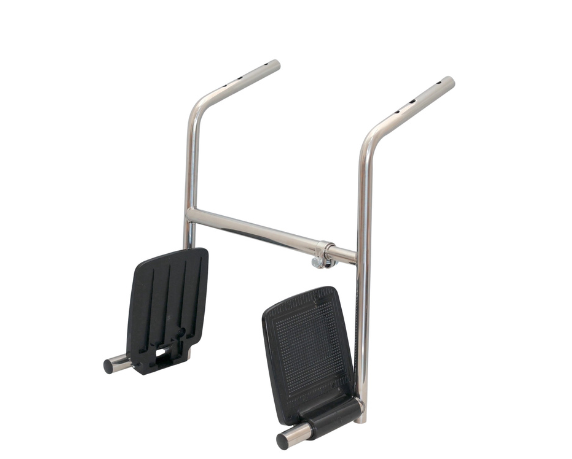
Our new design salon chair footrest addresses these pain points head-on. Made with 7/8-inch lightweight aluminum tubing and an adjustable bar, it is built to withstand daily use without compromising comfort. The upward-moving footplate gives clients a stable surface to rest their feet while making it easier to get in and out of the chair.

This isn’t a cosmetic upgrade. It is a functional redesign that considers how real clients and stylists move throughout the day.

How the Footrest Changes Daily Operations

The impact of upgrading is immediate. Services run more smoothly, with fewer interruptions to adjust positioning. Stylists save time, which means they can take more clients or focus more energy on creating the perfect cut or color.

Even small efficiencies compound over time. The footrest turns what used to be a moment of friction into a seamless part of the service experience.

Serving Every Age and Ability

Our footrest is designed to make climbing into the chair easier, whether you are a child getting your first haircut or an older adult with reduced mobility. It takes the stress out of entry and exit, and for salons serving diverse communities, that matters.

This is not just about accessibility. It is about preserving dignity and independence in an environment where people come to feel their best.

A Better Experience for Stylists Too

Stylists benefit just as much. A stable hairdressing chair footrest means less repositioning, fewer safety risks, and more ergonomic working conditions. When both stylist and client are supported, the experience improves for everyone.

Closing the Loop on Innovation

Salons today cannot afford to settle for outdated tools. The new design salon chair footrest represents a leap forward, one that aligns with the expectations of modern, inclusive businesses.

Upgrading your footrest is not just a maintenance decision. It is a signal to clients that you care about their comfort, safety, and overall experience.

FAQs

Q1: Can the new design salon chair footrest be installed on existing chairs?
Yes. Our design was intentionally made to retrofit most standard salon chairs without requiring a full replacement.

Q2: How durable is this footrest in a high-traffic salon?
It is constructed from lightweight aluminum that resists wear and holds up to daily use even in busy, high-volume salons.

Q3: Does it make reclining chairs easier to use?
Yes. Clients can use the bar to push themselves gently toward the shampoo bowl, reducing stylist effort and improving comfort.

Q4: Is this footrest suitable for children’s salons?
Absolutely. The design doubles as a step, allowing kids to climb into the chair on their own, which makes for a fun, independent experience.

Q5: What kind of maintenance does it require?
Very little. A quick wipe-down and occasional check for screws is all that is needed to keep your hairdressing chair footrest functioning smoothly.

The Case for an Adjustable Footrest That Works for Everyone

When Accessibility Breaks Down

I still remember watching a client hesitate at the edge of a styling chair, her wheelchair just inches away. It was clear that getting into the chair would require two aides to lift her, a process that left her uncomfortable and undignified. Moments like this are what made me realize salons were unintentionally excluding people. Accessibility was not just a compliance issue, it was a customer experience issue.

Without the right wheelchair footrest attachment, something as basic as a haircut becomes stressful and exhausting. The problem isn’t a lack of care from salon owners, but a lack of tools designed to make transitions smooth and safe.

What Makes an Adjustable Footrest Different

A truly adjustable footrest changes the entire dynamic of the salon experience. It is designed to fit most standard styling chairs and allows clients to safely transfer, settle, and maintain stability during a service. It is not just a bar or plate bolted to a chair, but a thoughtfully engineered system with an upward-moving footplate and a secure bar for leverage.

In fact, one of its unique features is how it allows clients in reclining chairs to gently push themselves closer to a shampoo bowl, creating independence where they once had to rely on others. For children, the foot bar even becomes a helpful step to climb into the chair themselves.

Reimagining the Wheelchair Footrest Attachment

When we designed our wheelchair footrest attachment, we wanted more than compliance. We wanted dignity. We wanted to eliminate the need for awkward lifting, the rushed moments, and the visible discomfort that clients and stylists often share.

This design allows smooth entry and exit without sacrificing the stability needed for safe service. It is built with lightweight aluminum tubing, yet strong enough to support repeated daily use in busy salons.

Designing a Salon Where Everyone Belongs

For salons, this is about more than equipment. It is about brand promise. In a world where inclusivity matters, a salon that invests in accessibility is a salon that earns loyalty.

An adjustable footrest is not an afterthought. It is a statement: “Everyone is welcome here.” And this message resonates far beyond the client in the chair. Caregivers notice. Friends and family notice. It becomes a point of pride for the entire community.

From Challenge to Change: Our Journey

Our founder, Rose Zvonik, first witnessed this problem while working in a nursing home in 1995. After watching aides struggle to lift residents into styling chairs, she knew there had to be a better way. That moment sparked years of design, testing, and refinement.

The result is the product we have today — a salon footrest solution that not only meets ADA expectations but elevates them. It is a tool that transforms salon visits from stressful to seamless, one appointment at a time.

Final Thoughts: Building the Future of Inclusive Salons

Accessibility should not be optional. It should not be an upgrade. It should be the baseline of what a modern salon provides. The adjustable footrest is a small but powerful step toward a more inclusive beauty industry, where every client feels welcome and every stylist can work safely and confidently.

FAQs

Q1: What makes your wheelchair footrest attachment different from others?
Our wheelchair footrest attachment was designed with real salon use in mind. It is lightweight yet sturdy, fits most standard chairs, and gives clients the ability to move independently without compromising safety.

Q2: Can this footrest be used in both salons and home settings?
Yes, its simple installation process makes it perfect for professional salons and home care environments alike.

Q3: How long does installation take?
Most users report installation takes less than ten minutes with basic tools. It is designed for ease and does not require special expertise.

Q4: Is it suitable for children as well as adults?
Yes. In fact, many parents report that the foot bar doubles as a helpful step for children climbing into the chair.

Q5: Does an adjustable footrest improve stylist safety?
Absolutely. By providing stability and preventing sudden slips or falls, an adjustable footrest reduces strain on stylists who might otherwise have to manually support clients.

The Subtle Innovation Changing How Clients Experience the Salon Chair

  1. Rethinking Comfort in Salon Seating

In professional salon settings, the chair is more than furniture. It is the centerpiece of every interaction, the one constant in every appointment. A client’s comfort is never just about the seat—it’s about posture, positioning, and the feeling of being supported from the moment they sit down.

Our high chair footrest was developed to address these often-overlooked details. It replaces the U-shaped footrest to ensure a more effective solution. By refining this one feature, we create a better experience for clients and a more ergonomic workflow for stylists.

  1. Why a Footrest Shapes the Entire Client Experience

In salons, every second matters. A well-positioned hairdressing chair footrest reduces client fatigue during long services, keeps posture aligned for precise styling, and enhances overall relaxation.

More importantly, it creates a subtle sense of care. When a client rests their feet comfortably, their entire body settles. That stillness allows stylists to work with greater control and precision—something that benefits both the final look and the time it takes to achieve it.

  1. The Engineering Behind a Better Hairdressing Chair Footrest

This design did not happen by accident. Our footrest fits most salon chairs, making it a versatile upgrade rather than a specialized, brand-limited accessory.

Its functionality extends beyond standard styling. On a reclining chair for shampooing, the footrest bar allows the client to push gently with their feet, moving closer to the shampoo bowl without the stylist straining to adjust their position. The mechanism feels natural to the client and efficient to the stylist.

  1. Accessibility Without Compromise

The reality is that not all salon chairs are comfortable or accessible for every client. Seniors, clients with mobility challenges, and even younger children can find it difficult to position themselves comfortably.

Our high chair footrest addresses this in two ways:

  • For elderly or mobility-limited clients, the stability of the bar offers a secure foothold, making it easier to sit down and stand up.
  • For children, the same bar becomes a practical step, giving them independence while ensuring safety.

The result is a salon that feels more inclusive without compromising style or professionalism.

  1. From Children to Seniors: Designing for Every Client

One of the overlooked truths about salon equipment is that it must work equally well for vastly different body types and abilities. Designing for everyone does not mean settling for average—it means crafting a solution that adapts.

This footrest adapts to each client without requiring multiple chair models or complex adjustments. For salon owners, it means investing in one upgrade that benefits every appointment, every day.

  1. Looking Ahead in Salon Ergonomics

The next wave of salon innovation will not be about adding more screens, lights, or features—it will be about refining the essentials. The chair will always be the heart of the client experience, and the hairdressing chair footrest will remain an integral part of that equation.

When we design with empathy and precision, we are not just improving a piece of equipment. We are improving every service that takes place in the chair.

Rewind and Reflect

From its adaptability to its role in creating comfort for all ages, our high chair footrest is proof that subtle innovations can transform the everyday salon experience. In a world where client expectations continue to evolve, the details will always matter most.

FAQs

  1. Does the footrest fit all salon chairs?
    It fits most standard salon chairs and can also be used on reclining models. This makes it a practical upgrade without requiring a full chair replacement.
  2. Can it help clients with mobility challenges?
    Yes. For elderly or mobility-limited clients, the footrest provides a stable point of support, making it easier to enter and exit the chair.
  3. How does it work with reclining chairs?
    When used on a reclining chair for shampooing, the bar allows clients to push gently with their feet, moving themselves closer to the bowl without needing to be repositioned manually.
  4. Is it safe for children?
    Yes. The bar provides a foothold that helps children climb into the chair independently while maintaining stability.
  5. Will it improve stylist workflow?
    Absolutely. A comfortable and well-positioned client is easier to work with, leading to more precise results and less time spent adjusting seating.
  6. Is installation complicated?
    The footrest is designed for straightforward installation with minimal tools, making it a quick and cost-effective upgrade.

Designing Comfort: Rethinking the Salon Experience for Every Client

A salon should be more than a destination for beauty—it should be a space where every client feels welcome, safe, and cared for. That belief inspired an innovation that is reshaping how salons think about accessibility.

  1. A Market Blind Spot No One Should Ignore

For decades, salons have perfected their craft in hair, skin, and styling. Yet, there’s been a quiet gap in the experience—how clients physically interact with the chair itself. For clients with mobility challenges, such as seniors or individuals with disabilities, the traditional footrest can be a barrier rather than a comfort.

The salon chair footrest for handicapped clients is not just a niche solution. It’s a signal that the industry is waking up to the realities of an aging population, increased inclusivity expectations, and the moral imperative to make beauty services accessible to all.

  1. How Accessibility Shapes Client Loyalty

Accessibility isn’t a ‘nice-to-have’ feature—it’s a business differentiator. Salons that invest in equipment designed for all bodies send a message that goes far beyond marketing. They show that every guest is valued.

Clients notice when a salon anticipates their needs before they have to ask. For elderly patrons, a salon chair footrest for elderly customers offers stability, reduces strain, and transforms what could be a stressful appointment into an enjoyable ritual. This thoughtfulness is what turns a first-time visitor into a loyal client.

  1. Engineering a Footrest That Serves All

Our design approach was rooted in listening. We spoke with clients, stylists, and salon owners, and the feedback was consistent: a footrest should adapt to the client, not the other way around.

The result is a model that’s wider, adjustable, and supportive without being bulky. The salon chair footrest for handicapped clients has been engineered to accommodate mobility aids and various sitting positions. For elderly users, the footrest’s stability minimizes the risk of slipping and allows them to settle into the chair with ease.

Beyond the functional elements, the design respects the aesthetic expectations of high-end salons. It integrates seamlessly into the chair’s structure, so clients never feel singled out.

  1. When Design Meets Empathy

An inclusive salon is built on empathy as much as engineering. In designing our footrest, we considered every detail—materials that are comfortable underfoot, mechanisms that operate smoothly, and surfaces that are easy to sanitize without compromising durability.

This is more than hardware. It’s a tool for dignity. It allows a senior client to cross the salon floor without hesitation. It helps a person recovering from surgery to sit comfortably without overexerting themselves. It allows stylists to focus on their artistry without worrying about the client’s safety.

  1. Building a Standard, Not a Special Request

Accessibility should not exist in a separate catalog of “special order” items. It should be the baseline. By normalizing the salon chair footrest for elderly and other adaptive designs, salons send a powerful signal—they are committed to equality in comfort and experience.

In the years ahead, salon clients will increasingly expect inclusive design as a default. Businesses that embrace this now are positioning themselves at the forefront of a cultural shift.

  1. The Future of Inclusive Salon Spaces

The next wave of salon design will integrate accessibility so completely that it won’t feel like an “add-on.” It will simply be part of the beauty environment, just as good lighting or ergonomic styling tools are today.

In that future, every client—whether young, elderly, or navigating mobility challenges—will enjoy the same comfort, elegance, and attention. The salon chair footrest for handicapped will be remembered as one of the small yet transformative innovations that helped get us there.

Takeaway

Inclusion in design is not just about meeting needs—it’s about anticipating them. A footrest might seem like a small detail, but for the person who relies on it, it can be the difference between feeling like a customer and feeling like a valued guest. As salons move toward the future, the most memorable transformations may not happen in the mirror, but in the thoughtful details beneath the chair.

FAQs

Q1: Why is a salon chair footrest for handicapped clients important?
It removes physical barriers and ensures a safer, more comfortable seating experience for clients with disabilities, enabling them to fully enjoy their salon visit without strain or discomfort.

Q2: How does a salon chair footrest for elderly clients improve comfort?
It provides stability, supports posture, and allows seniors to settle into the chair without excessive bending or lifting, reducing physical stress during appointments.

Q3: Can this type of footrest be installed on existing chairs?
Yes, many models are designed for retrofitting, allowing salon owners to upgrade their existing chairs without replacing the entire unit.

Q4: Does adding an accessible footrest change the look of the salon chair?
Not at all. Our designs integrate seamlessly, maintaining the chair’s aesthetic while improving its functionality.

Q5: Is this footrest only for elderly or handicapped clients?
No, while it is engineered to meet their needs, many other clients appreciate the added comfort and stability.

Q6: How does this investment affect salon business?
By creating a more inclusive environment, salons can attract and retain a wider range of clients, strengthening loyalty and reputation.