• Rose Pedals, 3330 Westerly Lane, Sarasota FL 34239

Redefining Comfort: The Rise of the Rose Pedal Salon Footrest

There’s a quiet revolution happening beneath every salon chair. It’s not in the lighting or décor but in the subtle mechanics of accessibility and comfort. Where once the industry focused solely on aesthetics, a new generation of salon owners is asking a deeper question: how do we design experiences that serve everyone equally—and gracefully?

The Hidden Barrier in Everyday Design

Most salon interiors are masterpieces of form, texture, and light. But hidden within that elegance lies a long-ignored obstacle: the chair itself.
For clients with mobility challenges, the act of getting into or out of a salon chair can be exhausting, even risky. It’s not just a matter of comfort—it’s about dignity. Stylists often find themselves balancing empathy with practicality, trying to help without making the client feel dependent.

This everyday tension became the seed of innovation for what would become one of the most quietly transformative tools in modern salon design.

The Turning Point for Salon Accessibility

In 1995, while working in a nursing home, I saw the same scene repeat itself—again and again. Aides struggled to lift residents into styling chairs, and the residents, eager to feel beautiful, often ended up embarrassed or uncomfortable. That moment defined everything that followed.

The question wasn’t how to modify the chair—it was how to reimagine interaction. Accessibility wasn’t supposed to feel clinical or awkward. It should feel invisible, built into the experience from the ground up.

This is where the philosophy behind every Rose Pedal Salon Footrest began: to merge engineering precision with human-centered care.

What Sets the Rose Pedal Salon Footrest Apart

Every salon tool claims to improve comfort, but few are built with empathy at the center of their design. The Rose Pedal Salon Footrest isn’t just a product upgrade—it’s a rethinking of what “comfort” means for both stylist and client.

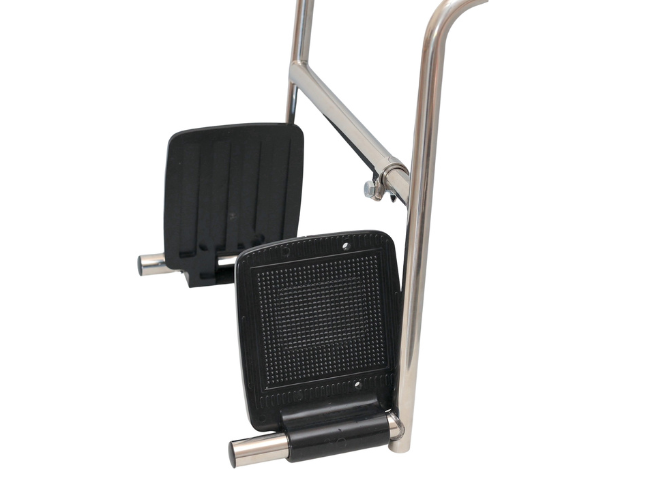
Crafted from reinforced steel and precision-balanced components, the footrest maintains its form even under high-volume use. Yet its real innovation lies in accessibility. By providing stable, adjustable support, it eliminates the barrier between mobility and participation. Clients who once required assistance can now enter and exit the chair independently.

Stylists notice the difference immediately. Sessions flow more smoothly, posture improves, and both sides of the chair share the same ease of movement.

Engineering Access into Beauty Spaces

Inclusivity doesn’t start with compliance. It starts with imagination.
When designing adaptive salon equipment, every detail—from the pedal angle to the tactile surface texture—has to anticipate the real-world motions of diverse clients. The Rose Pedal Salon Footrest was engineered to meet that complexity.

It adapts naturally to a range of body types and mobility conditions without mechanical fuss or aesthetic compromise. That balance between utility and beauty has become its signature.

As salons modernize their layouts and experiences, products like these are no longer optional—they are essential infrastructure for the next chapter of client care.

How the Salon Footrest Attachment in Florida Is Shaping Industry Standards

Florida has quietly become a proving ground for salon innovation. With its high senior population and growing inclusivity mandates, salon owners are rethinking everything from lighting to floor spacing. And at the center of that transformation sits a deceptively simple upgrade—the salon footrest attachment in Florida that has been redefining what “accessibility” looks like in style-driven spaces.

Early adopters report striking results: fewer lifting incidents, faster client turnover, and higher satisfaction ratings across all age groups. The data aligns with a larger cultural shift—consumers now value comfort and care as much as aesthetics.

In other words, Florida’s salons aren’t just following a trend. They’re setting a precedent.

Closing the Comfort Gap for Good

Accessibility in salons isn’t charity—it’s strategy. It builds loyalty, widens clientele, and elevates brand perception in ways no marketing campaign can replicate.

The Rose Pedal Salon Footrest represents more than a product line. It’s a quiet promise that no client will feel left out of the experience of beauty again. For salon owners, it’s a reminder that innovation isn’t always loud. Sometimes, it’s the subtle click of a footrest that says, “You belong here.”

And that sound might just be the future of inclusive design.

FAQs

  1. What makes the Rose Pedal Salon Footrest different from standard footrests?
    It’s designed specifically for accessibility and balance, offering secure footing and independent access for clients of all mobility levels.
  2. How does the salon footrest attachment in Florida benefit salon owners?
    It reduces the need for staff assistance, improves safety, and creates a more inclusive environment for both regular and new clients.
  3. Can the footrest be installed on existing salon chairs?
    Yes. It’s designed to integrate seamlessly with most standard salon chair bases, allowing easy installation without professional modification.
  4. Is the Rose Pedal footrest only for clients with disabilities?
    Not at all. While it’s engineered with accessibility in mind, clients of all ages and abilities benefit from its ergonomic stability.
  5. Why are Florida salons leading in adopting this innovation?
    Florida’s diverse clientele and proactive inclusivity standards make it the ideal testing ground for adaptive salon equipment.
  6. What is the long-term value of installing this footrest?
    It enhances client satisfaction, strengthens brand reputation, and future-proofs salons for emerging accessibility requirements across the U.S.
Reinventing Accessibility: How a Simple Footrest Changed the Salon Experience Forever

In every salon, there’s a quiet moment before a service begins—the chair turns, the client settles, and trust is built in that small exchange. But for millions with limited mobility, this moment has long been a struggle. What began as a daily challenge inside nursing homes has become the blueprint for rethinking inclusivity in the beauty industry.

The Moment That Sparked a Movement

It started in the most unexpected setting: a nursing home.
In the mid-1990s, I watched as aides struggled to lift residents into standard salon chairs. It wasn’t carelessness—it was simply the reality that the design had never considered people with disabilities. I saw residents who wanted to look and feel their best, but their experience began with discomfort and dependence.

That memory stayed with me. The image of someone unable to enjoy a simple haircut without assistance became the turning point. I knew the solution had to be practical, inclusive, and effortless.

From Observation to Innovation

The idea for what would become today’s adaptive salon chair replacement footrest started not as a product but as a question: How could a single piece of hardware restore dignity?

I began searching for manufacturers who understood the importance of engineering precision with empathy. Our first partner, a small company in Maryland, helped prototype the concept. Later, a Minnesota-based manufacturer refined it—offering stronger materials, smoother motion, and consistent quality.

This journey wasn’t just about producing a component. It was about reshaping how salons think about accessibility—from something optional to something foundational.

Designing for Dignity and Daily Function

Every stylist knows that efficiency matters as much as aesthetics. The salon chair footrest replacement we developed needed to do more than assist with entry; it had to enhance every service interaction.

The result is a functional, universal design that lets clients position themselves comfortably and independently. The structure supports natural movement and provides stability without altering the appearance of the salon’s existing furniture.

Stylists appreciate how it improves workflow. Clients, especially seniors or those using mobility aids, appreciate how it removes anxiety from the most basic act of self-care: sitting down safely.

Engineering a Better Salon Chair Footrest Replacement

What makes this footrest different isn’t just its physical design but its human-centered engineering. It redefines what “replacement” means in the salon context.

Instead of replicating the outdated forms of traditional chair accessories, it upgrades them. Powder-coated materials resist wear from high-volume use. Reinforced brackets ensure no wobble or slippage. Each salon chair replacement footrest integrates seamlessly without requiring expensive modifications.

This simplicity in installation hides the sophistication of the idea. In the same way good architecture disappears into experience, great accessibility design simply works—quietly and consistently.

Beyond Accessibility: The Human Return on Design

The success of this innovation can’t be measured in sales alone. The real return lies in what it gives back: independence, dignity, and inclusivity.

For elderly clients, it means not having to ask for help. For wheelchair users, it means being treated as equals in environments that once felt exclusionary. For salon owners, it translates into customer loyalty, stronger reputation, and an expanded client base.

Accessibility isn’t a trend. It’s the future of service design—and every upgrade that respects human experience becomes part of a much larger transformation.

The Future of Universal Salon Comfort

As more salons adopt adaptive solutions, the industry edges closer to a universal model of care—where comfort and inclusivity are designed in, not added on.

The evolution of the salon chair footrest replacement is proof that small innovations can spark systemic change. From nursing homes to modern beauty studios, what began as a personal observation has become a collective step forward in how we define beauty: not by limitation, but by access.

Reflect

When we talk about design that matters, we often think of technology or architecture. But sometimes, it’s a single hinge or pedal that carries the greatest impact.

Creating this salon chair replacement footrest wasn’t about reinventing the chair. It was about reimagining the experience—making sure that everyone, regardless of mobility, has the chance to participate in the rituals that make us feel human.

And that’s not just innovation. That’s empathy engineered.

FAQs

  1. What makes this salon chair footrest replacement unique?
    It’s designed for universal accessibility, offering stability and ease of use without altering the look or structure of your existing salon chairs.
  2. How does the salon chair replacement footrest help clients with mobility challenges?
    It allows clients to enter and exit salon chairs safely and independently, eliminating the need for physical assistance and improving their comfort throughout the service.
  3. Is the footrest compatible with all salon chair models?
    While designed for broad adaptability, it’s best suited for chairs that allow bolt-on or adjustable mounting systems, making it a practical upgrade for most modern salons.
  4. Does replacing a salon chair footrest require professional installation?
    No. Most salon owners can install the unit easily using basic tools. Each product includes simple instructions to ensure seamless setup.
  5. How does the new design benefit stylists?
    Stylists experience smoother workflow and reduced strain, as clients can adjust their position comfortably without assistance—saving time and improving ergonomics.
  6. Why should salons consider investing in this replacement footrest?
    It’s not just an accessory—it’s an investment in client dignity, staff efficiency, and brand reputation. Accessibility is becoming a defining feature of forward-thinking salons.

The Subtle Innovation Changing How Clients Experience the Salon Chair

  1. Rethinking Comfort in Salon Seating

In professional salon settings, the chair is more than furniture. It is the centerpiece of every interaction, the one constant in every appointment. A client’s comfort is never just about the seat—it’s about posture, positioning, and the feeling of being supported from the moment they sit down.

Our high chair footrest was developed to address these often-overlooked details. It replaces the U-shaped footrest to ensure a more effective solution. By refining this one feature, we create a better experience for clients and a more ergonomic workflow for stylists.

  1. Why a Footrest Shapes the Entire Client Experience

In salons, every second matters. A well-positioned hairdressing chair footrest reduces client fatigue during long services, keeps posture aligned for precise styling, and enhances overall relaxation.

More importantly, it creates a subtle sense of care. When a client rests their feet comfortably, their entire body settles. That stillness allows stylists to work with greater control and precision—something that benefits both the final look and the time it takes to achieve it.

  1. The Engineering Behind a Better Hairdressing Chair Footrest

This design did not happen by accident. Our footrest fits most salon chairs, making it a versatile upgrade rather than a specialized, brand-limited accessory.

Its functionality extends beyond standard styling. On a reclining chair for shampooing, the footrest bar allows the client to push gently with their feet, moving closer to the shampoo bowl without the stylist straining to adjust their position. The mechanism feels natural to the client and efficient to the stylist.

  1. Accessibility Without Compromise

The reality is that not all salon chairs are comfortable or accessible for every client. Seniors, clients with mobility challenges, and even younger children can find it difficult to position themselves comfortably.

Our high chair footrest addresses this in two ways:

  • For elderly or mobility-limited clients, the stability of the bar offers a secure foothold, making it easier to sit down and stand up.
  • For children, the same bar becomes a practical step, giving them independence while ensuring safety.

The result is a salon that feels more inclusive without compromising style or professionalism.

  1. From Children to Seniors: Designing for Every Client

One of the overlooked truths about salon equipment is that it must work equally well for vastly different body types and abilities. Designing for everyone does not mean settling for average—it means crafting a solution that adapts.

This footrest adapts to each client without requiring multiple chair models or complex adjustments. For salon owners, it means investing in one upgrade that benefits every appointment, every day.

  1. Looking Ahead in Salon Ergonomics

The next wave of salon innovation will not be about adding more screens, lights, or features—it will be about refining the essentials. The chair will always be the heart of the client experience, and the hairdressing chair footrest will remain an integral part of that equation.

When we design with empathy and precision, we are not just improving a piece of equipment. We are improving every service that takes place in the chair.

Rewind and Reflect

From its adaptability to its role in creating comfort for all ages, our high chair footrest is proof that subtle innovations can transform the everyday salon experience. In a world where client expectations continue to evolve, the details will always matter most.

FAQs

  1. Does the footrest fit all salon chairs?
    It fits most standard salon chairs and can also be used on reclining models. This makes it a practical upgrade without requiring a full chair replacement.
  2. Can it help clients with mobility challenges?
    Yes. For elderly or mobility-limited clients, the footrest provides a stable point of support, making it easier to enter and exit the chair.
  3. How does it work with reclining chairs?
    When used on a reclining chair for shampooing, the bar allows clients to push gently with their feet, moving themselves closer to the bowl without needing to be repositioned manually.
  4. Is it safe for children?
    Yes. The bar provides a foothold that helps children climb into the chair independently while maintaining stability.
  5. Will it improve stylist workflow?
    Absolutely. A comfortable and well-positioned client is easier to work with, leading to more precise results and less time spent adjusting seating.
  6. Is installation complicated?
    The footrest is designed for straightforward installation with minimal tools, making it a quick and cost-effective upgrade.