A salon should be more than a destination for beauty—it should be a space where every client feels welcome, safe, and cared for. That belief inspired an innovation that is reshaping how salons think about accessibility.
-
A Market Blind Spot No One Should Ignore
For decades, salons have perfected their craft in hair, skin, and styling. Yet, there’s been a quiet gap in the experience—how clients physically interact with the chair itself. For clients with mobility challenges, such as seniors or individuals with disabilities, the traditional footrest can be a barrier rather than a comfort.
The salon chair footrest for handicapped clients is not just a niche solution. It’s a signal that the industry is waking up to the realities of an aging population, increased inclusivity expectations, and the moral imperative to make beauty services accessible to all.
-
How Accessibility Shapes Client Loyalty
Accessibility isn’t a ‘nice-to-have’ feature—it’s a business differentiator. Salons that invest in equipment designed for all bodies send a message that goes far beyond marketing. They show that every guest is valued.
Clients notice when a salon anticipates their needs before they have to ask. For elderly patrons, a salon chair footrest for elderly customers offers stability, reduces strain, and transforms what could be a stressful appointment into an enjoyable ritual. This thoughtfulness is what turns a first-time visitor into a loyal client.
-
Engineering a Footrest That Serves All
Our design approach was rooted in listening. We spoke with clients, stylists, and salon owners, and the feedback was consistent: a footrest should adapt to the client, not the other way around.
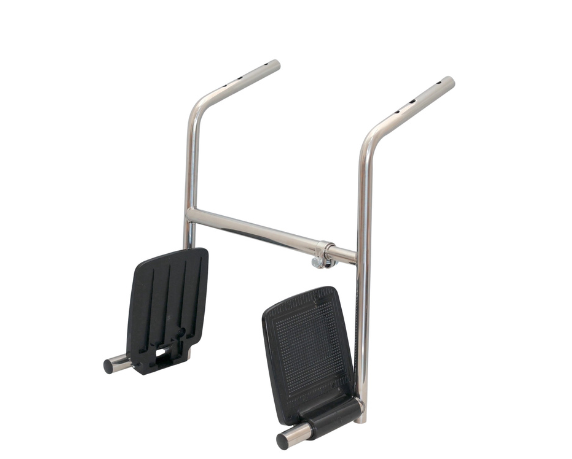
The result is a model that’s wider, adjustable, and supportive without being bulky. The salon chair footrest for handicapped clients has been engineered to accommodate mobility aids and various sitting positions. For elderly users, the footrest’s stability minimizes the risk of slipping and allows them to settle into the chair with ease.
Beyond the functional elements, the design respects the aesthetic expectations of high-end salons. It integrates seamlessly into the chair’s structure, so clients never feel singled out.
-
When Design Meets Empathy
An inclusive salon is built on empathy as much as engineering. In designing our footrest, we considered every detail—materials that are comfortable underfoot, mechanisms that operate smoothly, and surfaces that are easy to sanitize without compromising durability.
This is more than hardware. It’s a tool for dignity. It allows a senior client to cross the salon floor without hesitation. It helps a person recovering from surgery to sit comfortably without overexerting themselves. It allows stylists to focus on their artistry without worrying about the client’s safety.
-
Building a Standard, Not a Special Request
Accessibility should not exist in a separate catalog of “special order” items. It should be the baseline. By normalizing the salon chair footrest for elderly and other adaptive designs, salons send a powerful signal—they are committed to equality in comfort and experience.
In the years ahead, salon clients will increasingly expect inclusive design as a default. Businesses that embrace this now are positioning themselves at the forefront of a cultural shift.
-
The Future of Inclusive Salon Spaces
The next wave of salon design will integrate accessibility so completely that it won’t feel like an “add-on.” It will simply be part of the beauty environment, just as good lighting or ergonomic styling tools are today.
In that future, every client—whether young, elderly, or navigating mobility challenges—will enjoy the same comfort, elegance, and attention. The salon chair footrest for handicapped will be remembered as one of the small yet transformative innovations that helped get us there.
Takeaway
Inclusion in design is not just about meeting needs—it’s about anticipating them. A footrest might seem like a small detail, but for the person who relies on it, it can be the difference between feeling like a customer and feeling like a valued guest. As salons move toward the future, the most memorable transformations may not happen in the mirror, but in the thoughtful details beneath the chair.
FAQs
Q1: Why is a salon chair footrest for handicapped clients important?
It removes physical barriers and ensures a safer, more comfortable seating experience for clients with disabilities, enabling them to fully enjoy their salon visit without strain or discomfort.
Q2: How does a salon chair footrest for elderly clients improve comfort?
It provides stability, supports posture, and allows seniors to settle into the chair without excessive bending or lifting, reducing physical stress during appointments.
Q3: Can this type of footrest be installed on existing chairs?
Yes, many models are designed for retrofitting, allowing salon owners to upgrade their existing chairs without replacing the entire unit.
Q4: Does adding an accessible footrest change the look of the salon chair?
Not at all. Our designs integrate seamlessly, maintaining the chair’s aesthetic while improving its functionality.
Q5: Is this footrest only for elderly or handicapped clients?
No, while it is engineered to meet their needs, many other clients appreciate the added comfort and stability.
Q6: How does this investment affect salon business?
By creating a more inclusive environment, salons can attract and retain a wider range of clients, strengthening loyalty and reputation.